
When network performance starts falling behind demand, the instinct is often to look at hardware to add capacity, replace subscriber radios, or deploy newer access points.
But before expanding the equipment footprint, there is another part of the network worth checking: the software already running on the radios in the field.
Cambium Networks recently analysed a sample of 14,238 ePMP radios and found that only about 19% were running the recommended 5.11.0 or 5.11.1 firmware. Around 36% were still running versions earlier than 5.10, leaving a significant portion of the installed base well behind the current software generation.
For operators with ePMP networks built over several years, that gap matters.
The ePMP ecosystem spans multiple generations of hardware, from earlier ePMP 1000 and 2000 Series equipment through ePMP 3000, Force 300 and the newer ePMP 4000 Series.
The capabilities available to each platform differ, but the principle is the same: firmware is part of how operators maintain the value of the network they have already deployed.
Firmware Is Part of the ePMP Platform
Firmware is easy to treat as something that only deserves attention when a radio develops a problem.
In practice, Cambium uses software releases to improve how ePMP equipment operates long after the hardware has been installed.
For established ePMP 3000 sector deployments, Force 300 subscriber modules and other supported equipment, newer firmware can bring accumulated stability improvements, corrections and better operational behaviour.
Newer platforms take that further by gaining features designed around capabilities already built into the hardware.
That distinction matters. Staying current does not mean every ePMP radio gains the same new functionality. It means each supported platform benefits from the software development applicable to it.
What Staying Current Can Deliver
Recent ePMP releases demonstrate how significant those software improvements can become.
On supported ePMP 4000 Series equipment, Asymmetric Uplink Bandwidth allows operators to use different channel widths for downstream and upstream traffic. This can help make better use of spectrum where subscriber demand is weighted heavily toward downloads.
Newer firmware has also introduced MU-MIMO testing capabilities for supported ePMP 4500 and 4600 deployments, helping operators evaluate subscriber grouping and compare performance more effectively.
For applicable 6 GHz networks, Cambium has introduced additional AFC tools that give operators better visibility into available channels and permitted power levels before making configuration changes. Older ePMP platforms will not inherit those hardware-specific capabilities, but they still benefit from the less visible side of firmware development: fixes, stability improvements, and better interoperability.
The Cost of Letting Firmware Fall Behind
Firmware can be easy to overlook when radios are online and customers are connected, but older releases may leave known issues unresolved long after Cambium has addressed them.
Across a large ePMP deployment, that can translate into unnecessary troubleshooting time, especially where similar devices are running different software versions and behaving inconsistently.
Staying reasonably current also helps operators keep pace with security and platform changes introduced over the life of the equipment. The cost of outdated firmware is therefore rarely a dramatic failure; more often, it appears as avoidable support effort and lost operational efficiency.
Managing a Mixed-Generation ePMP Network
Many WISP networks naturally end up running several generations of ePMP equipment side by side.
Operators typically add new sectors or upgrade specific parts of the network as capacity demands change, while existing infrastructure remains in service where it continues to perform well. Over time, that can leave a network with older ePMP platforms operating alongside ePMP 3000, Force 300 and newer 4000 Series equipment.
In that kind of environment, knowing what firmware is running becomes important. cnMaestro gives operators a clear view of software versions across the ePMP estate, making it easier to identify radios that have fallen several releases behind.
That does not mean pushing every new firmware release straight into production. Operators should review the release notes, confirm compatibility with the hardware in use and test upgrades on representative devices before rolling them out more widely.
The aim is simply to prevent parts of the network from drifting so far behind that useful fixes and improvements accumulate without ever reaching the equipment in the field.
_1786705175.png)
When Software Changes What Hardware Can Do
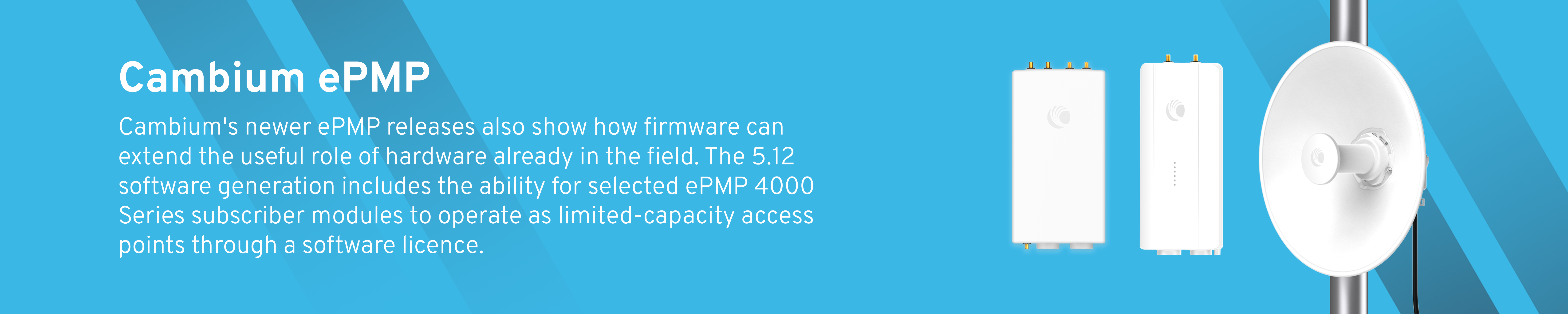
Cambium's newer ePMP releases also show how firmware can extend the useful role of hardware already in the field. The 5.12 software generation includes the ability for selected ePMP 4000 Series subscriber modules to operate as limited-capacity access points through a software licence.
Supported radios can serve up to eight subscriber modules, creating another deployment option for low-density coverage or locations where a conventional sector AP may not yet be justified.
That is a particularly clear example of software extending the value of a hardware investment after deployment. The equipment itself has not changed. What the operator can do with it has.
Optimize Your ePMP Network and Plan the Next Upgrade
Cambium's firmware data highlights an easy gap for operators to overlook. A network can be functioning normally while parts of it are several software generations behind. For an ePMP operator, that means a network may be due for an upgrade without necessarily being due for new hardware.
Before expanding the equipment footprint, it is worth knowing what is already deployed, which firmware versions are running, and what improvements have become available since those radios were installed.
For a large ePMP estate, that review may uncover useful gains from infrastructure the business has already paid for. Optace Networks is an authorized Cambium Networks distributor in Kenya. Talk to our team about your existing ePMP deployment, firmware upgrade planning, or the next stage of your fixed wireless network expansion.
Latest Articles
Wed Oct 14 2026
Netgate 8300 for High-Capacity Firewall and VPN DeploymentsFri Sep 18 2026
How to Size a Netgate Firewall for Your Business NetworkWed Sep 09 2026
Planning Internet Failover with Netgate and pfSense PlusFri Aug 28 2026
Fuzion FTP-300 for Outdoor IoT and Surveillance NetworksRelated Articles
.jpg)
ePMP 3000 - 5X Performance with Gen3 Technology
-(1).png)
Africa Tech Festival Displays Strides in Connectivity and Telecommunications Infrastructure across Africa
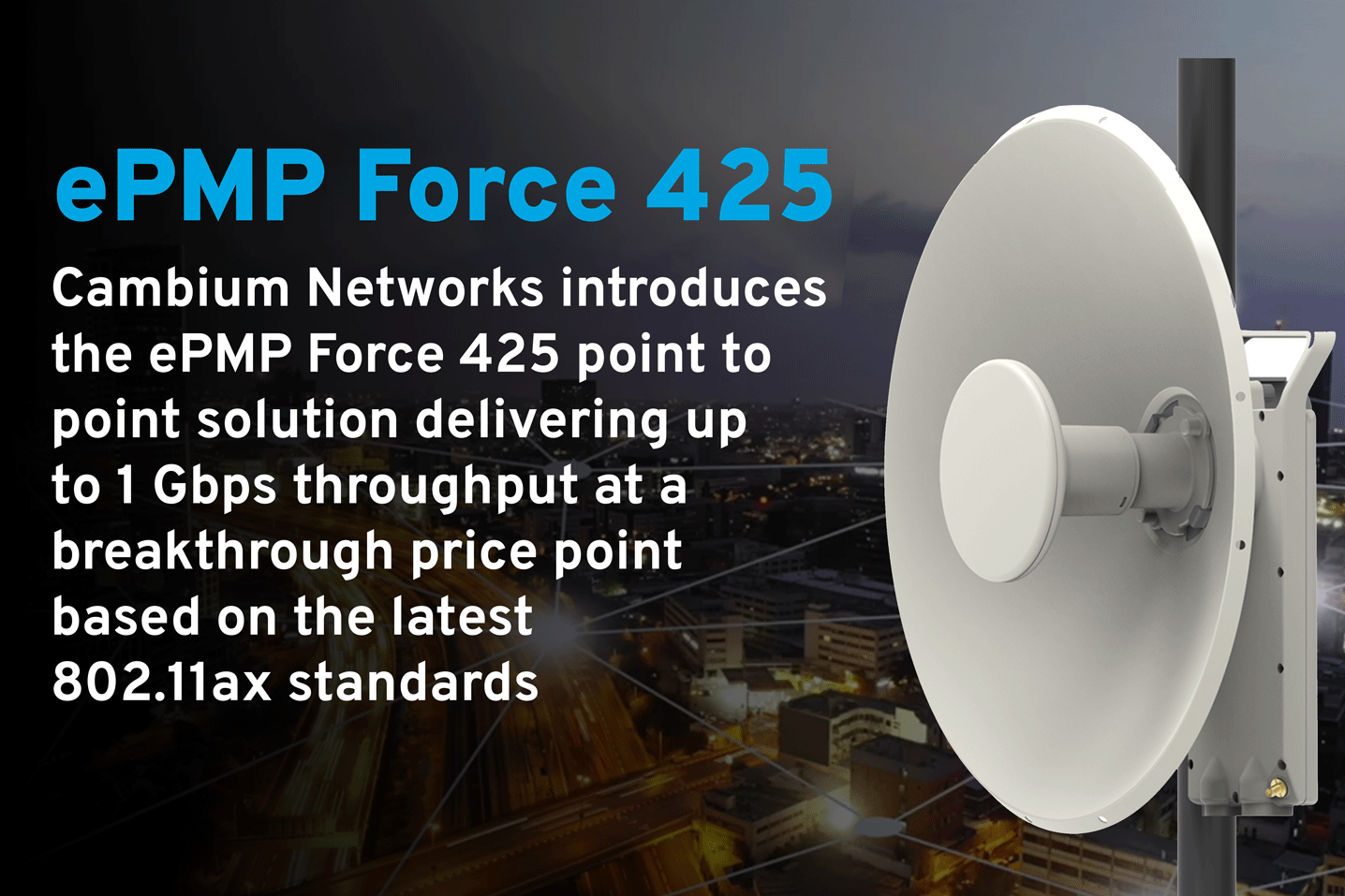
Cambium Networks ePMP Force 425 - The Industry’s First Point-to-Point Solution Based on 802.11ax
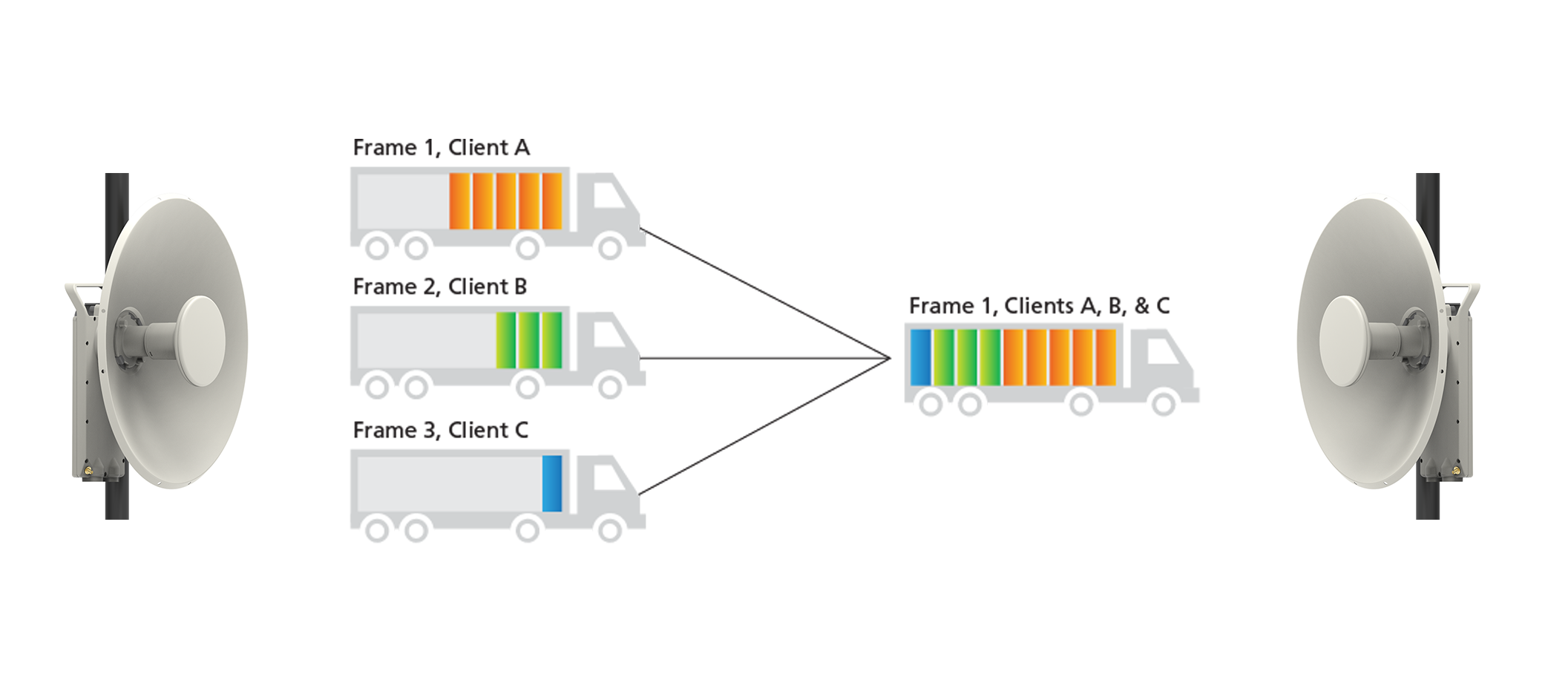
The Power of OFDMA in Wireless Broadband
In this article, we delve into the principles of OFDMA, the defining principle of the 802.11ax standard, its applications, and its impact on wireless broadband.



© 2026 PoweredbyOptace Networks Limited. All Rights Reserved.